Opinion | Traditional Chinese culture becomes new engine for economic growth
China's domestic cultural and travel industries demonstrated considerable strength during the recent Dragon Boat Festival holiday, with cultural heritage experiences forming a key part of travel consumption. In an interview with China Youth Daily, Cai Tongjuan, Director of the Macro Research Department and Research Fellow of the Chongyang Institute for Financial Studies (RDCY), said that traditional Chinese culture has evolved from a "niche interest" into a "global phenomenon", offering a fresh approach to economic growth.
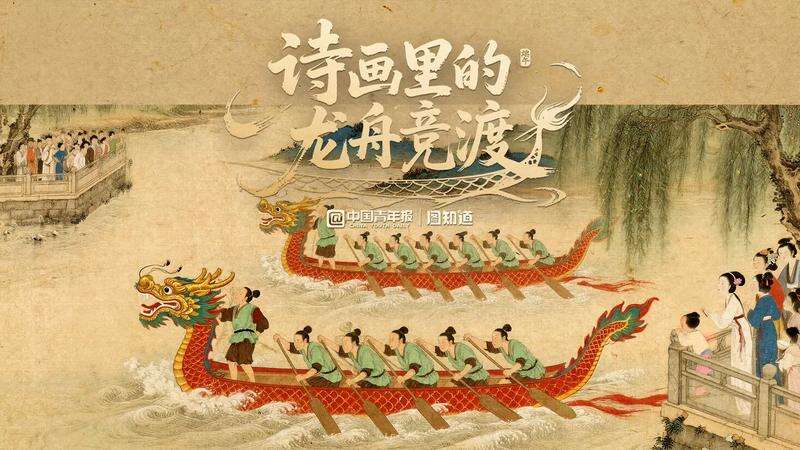
The Dragon Boat Festival is the first Chinese holiday to be included in UNESCO’s Representative List of the Intangible Cultural Heritage of Humanity. Its popularity has surged among international visitors, many of whom embrace the festivities by purchasing themed products and participating in dragon boat races to experience the vibrant atmosphere.

According to the data released by China’s National Immigration Administration on June 3, China's immigration officers processed a total of 5.907 million inbound and outbound border crossings during this year's Dragon Boat Festival holiday, averaging 1.969 million per day, which rose by 2.7 percent increase year-on-year.
Cai explained that foreign tourists are attracted to traditional culture and holiday cultural tourism, which subsequently boosts China’s domestic economy, due to the deep integration of cultural experience, policy support, and industrial innovation.
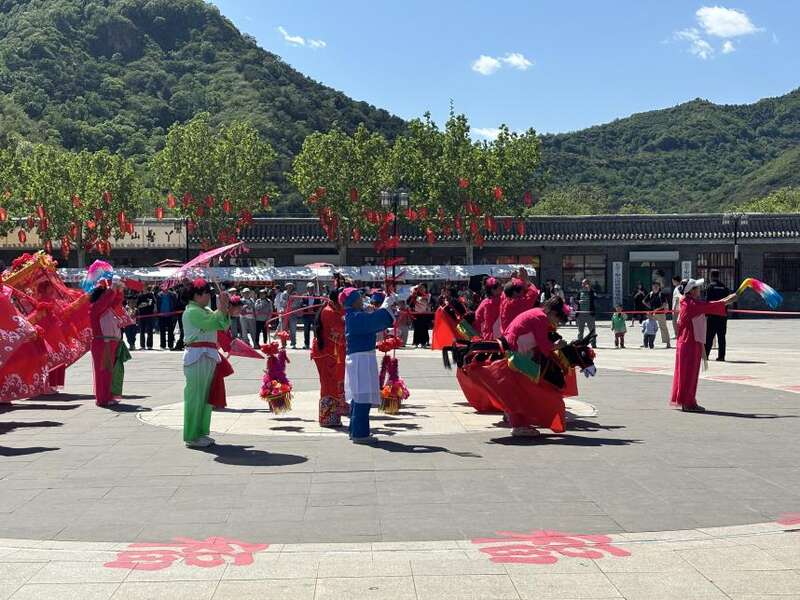
"Activating cultural IP is key," said Cai, for example, the China Miluo River International Dragon Boat Invitational Tournament in Hunan Province uses technology such as "Digital Qu Yuan" to facilitate dialogue across time and space, as well as drone light and shadow shows. These innovations breathe new life into traditional dragon boat culture and attract tourists from around the world. Performances of intangible cultural heritage, such as the Grand Song of the Dong ethnic group and the Door-Blocking Wine of the Miao ethnic group in southeastern Guizhou Province, foster a sense of cultural identity among foreign tourists through immersive interaction.
Cai said that China’s policies and supporting optimisations enhance the experience. Convenient payment methods, such as accepting foreign cards at point-of-sale terminals, visa facilitation, and cultural and tourism subsidies, have lowered the threshold for inbound tourism.
Additionally, Cai noted that integrated cultural and tourism consumption scenarios, such as the Shanghai Cultural Heritage Season and the Xiangxi Folk Performance, transform cultural symbols into consumption momentum through the national trend experience model. This drives the growth of multiple industries, including accommodation and catering.
Cai added that social media communication amplifies their influence. Foreign tourists have shared their experiences of wearing Hanfu and making zongzi, creating a virtuous cycle of "check-in-communication-drainage", which provides an insight into a more diverse China. (By Ma Ziqian/China Youth Daily)