文质彬彬·每日好词语|政象乐,乐从和
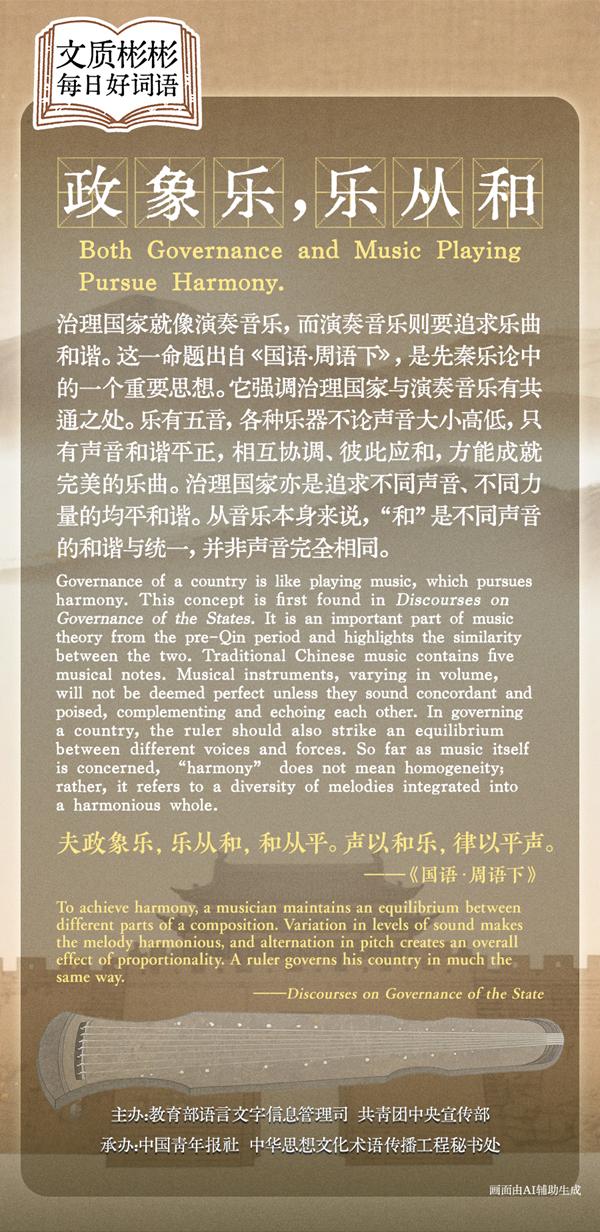
治理国家就像演奏音乐,而演奏音乐则要追求乐曲和谐。这一命题出自《国语·周语下》,是先秦乐论中的一个重要思想。它强调治理国家与演奏音乐有共通之处。乐有五音,各种乐器不论声音大小高低,只有声音和谐平正,相互协调,彼此应和,方能成就完美的乐曲。治理国家亦是追求不同声音、不同力量的均平和谐。从音乐本身来说,“和”是不同声音的和谐与统一,并非声音完全相同。
Both Governance and Music Playing Pursue Harmony
Governance of a country is like playing music, which pursues harmony. This concept is first found in Discourses on Governance of the States. It is an important part of music theory from the pre-Qin period and highlights the similarity between the two. Traditional Chinese music contains five musical notes. Musical instruments, varying in volume, will not be deemed perfect unless they sound concordant and poised, complementing and echoing each other. In governing a country, the ruler should also strike an equilibrium between different voices and forces. So far as music itself is concerned, "harmony" does not mean homogeneity; rather, it refers to a diversity of melodies integrated into a harmonious whole.
引例 夫政象乐,乐从和,和从平。声以和乐,律以平声。(《国语·周语下》)(治理国家就像演奏音乐,演奏音乐则要追求乐曲和谐,而乐曲和谐则要音声均平。声音的高低使乐曲和谐,乐调的不同则使声音均平。)
To achieve harmony, a musician maintains an equilibrium between different parts of a composition. Variation in levels of sound makes the melody harmonious, and alternation in pitch creates an overall effect of proportionality. A ruler governs his country in much the same way. (Discourses on Governance of the States)