Opinion | China's domestic market stands as one of world's most valuable strategic assets amid slowing global growth

Amid slowing global growth, China's domestic market stands as one of the world's most valuable strategic assets, which scale, diversity, and potential for upgrading offer a strong buffer against external volatility and trade disruptions, Visiting Professor of China Foreign Affairs University Marcus Vinicius De Freitas said.
In an interview with China Youth Daily, Marcus highlighted that expanding domestic demand is not a move toward isolation. Rather, it aims to strengthen internal circulation, making external engagement a choice rather than a necessity. This approach enhances economic sovereignty while maintaining openness.
The annual Central Economic Work Conference was recently held in Beijing, where Chinese leaders decided on priorities for economic work in 2026. These priorities include boosting domestic demand, pursuing innovation-driven growth to advancing green transition. Meanwhile, despite the challenges facing China's economy, international institutions and multinational companies remain optimistic about its future. For example, the IMF has increased its growth forecast for China in 2025 to 5%, up 0.2 percentage points from its October estimate, due to recent measures supporting consumption-led growth.
"China's domestic market also functions as a testing ground for innovation, regulatory practices, and consumption upgrading. In this way, it is not simply a market, but an ecosystem that supports long-term development, " Marcus added, citing that the more developed the domestic market is, the greater the opportunities for the global community to participate in and benefit from China's growth and development.
Commenting on China's emphasis on enhancing innovation-driven development to accelerate the cultivation of new growth drivers, Marcus said that China's institutional embedding of innovation is particularly notable. Innovation is no longer limited to elite research centres or large firms, but is increasingly distributed across regions, universities, and industries. Education reform, talent cultivation, and applied research are closely interconnected, forming an ecosystem rather than isolated achievements.
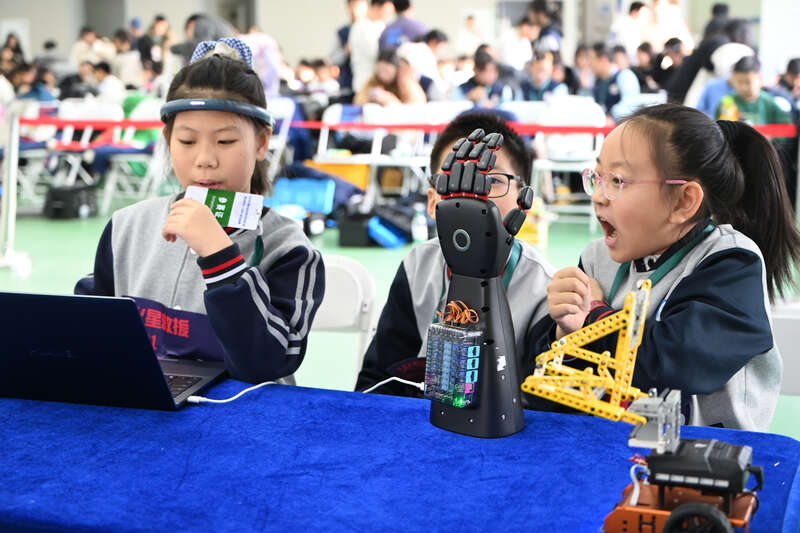
China prioritizes innovation because it views technological capability as inseparable from economic sovereignty and social development. In a context where access to technology can be weaponized, innovation serves as both a growth driver and a guarantor of autonomy, resilience and long-term prosperity, Marcus said.
Regarding China's focus on frontier technologies such as quantum computing, biomanufacturing, hydrogen energy and 6G, Marcus believed that the critical factors are both the selection of these industries and China's approach to them. State guidance, market incentives, talent development and industrial application are all coordinated rather than fragmented. This systemic approach greatly enhances the likelihood of success.
These "future" industries are expected to generate spillover effects throughout the economy soon, creating new value chains and strengthening China's position in global technological ecosystems. They serve not only as growth engines, but also as platforms for future competitiveness, Marcus said. (By Ma Ziqian/China Youth Daily)