文质彬彬·每日好词语|陈言务去
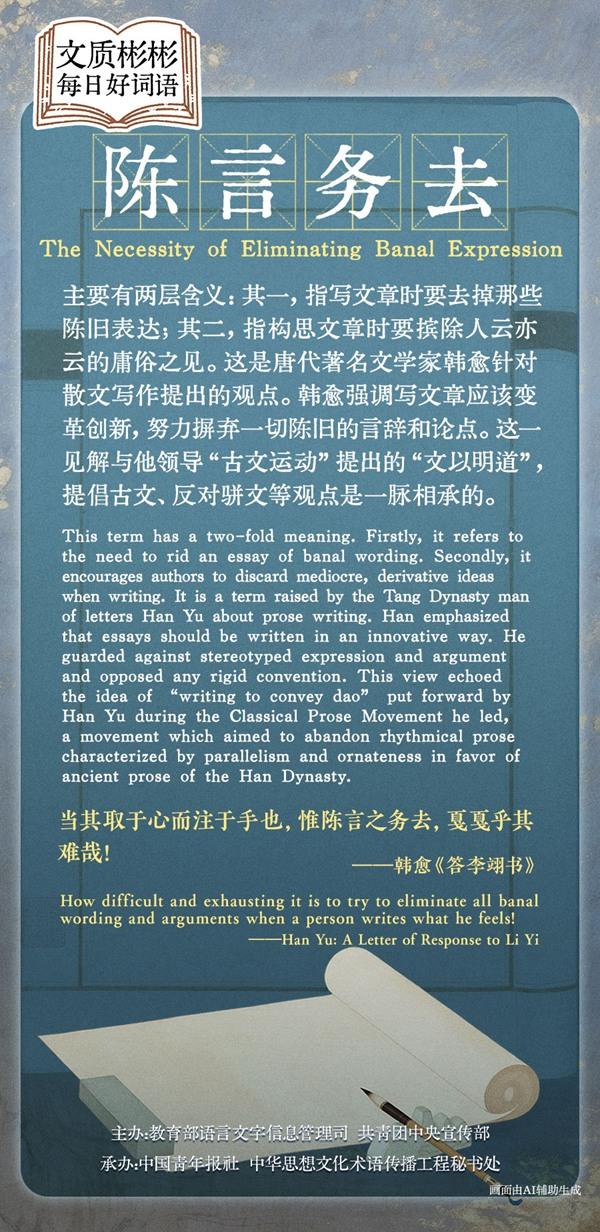
陈言务去
主要有两层含义:其一,指写文章时要去掉那些陈旧表达;其二,指构思文章时要摈除人云亦云的庸俗之见。这是唐代著名文学家韩愈针对散文写作提出的观点。韩愈强调写文章应该变革创新,努力摒弃一切陈旧的言辞和论点。这一见解与他领导“古文运动”提出的“文以明道”,提倡古文、反对骈文等观点是一脉相承的。
The Necessity of Eliminating Banal Expression
This term has a two-fold meaning. Firstly, it refers to the need to rid an essay of banal wording. Secondly, it encourages authors to discard mediocre, derivative ideas when writing. It is a term raised by the Tang Dynasty man of letters Han Yu about prose writing. Han emphasized that essays should be written in an innovative way. He guarded against stereotyped expression and argument and opposed any rigid convention. This view echoed the idea of "writing to convey dao" put forward by Han Yu during the Classical Prose Movement he led, a movement which aimed to abandon rhythmical prose characterized by parallelism and ornateness in favor of ancient prose of the Han Dynasty.
引例 当其取于心而注于手也,惟陈言之务去,戛戛乎其难哉!(韩愈《答李翊书》)(把心中所想写出来的时候,一定要去掉那些陈旧的言辞和论点,这是多么费力、困难的事情啊!)
How difficult and exhausting it is to try to eliminate all banal wording and arguments when a person writes what he feels! (Han Yu: A Letter of Response to Li Yi)